Mike Gundy on the Future of College Football: ‘We Need Contracts, Transparency to Move Forward’


The impact of name, image, and likeness (NIL) coupled with the transfer portal has made the weeks following the end of the regular season a living nightmare for college football coaches and fans.
I am 100% pro-player, and NIL in a fantastic opportunity for college athletes, when handled the way it was intended. Unfortunately, examples of that are few and far between, especially in college football.
The transfer portal window opened on Monday, December 4, and since then there have been over 1,500 college football players enter the portal. The vast majority of those players are hoping the land in a better opportunity to see the field or make more of an impact somewhere else, but the collection of top talents are also looking for a bigger paycheck.
There are teenagers making seven-figure salaries to play college football, on top of having their educations paid for. But for every Caleb Williams out there, there are 1,000 players who will never see that kind of NIL money. Still, players are jumping from roster to roster, many of them due to illegal contact from other programs before entering the portal, and it’s gone completely haywire.
An unregulated version of NFL free agency has been created, and until some rules are put into place, it will continue to be a cutthroat business that continually chips away at the integrity and passion-driven competition that makes college football so unique.
Since NIL was rolled out in July of 2021 with little to no guidelines on what was permitted as NIL, and what was considered pay-for-play. Now, it’s openly moved toward the latter, and the NCAA can’t do anything about it without risking litigation. At some point, Congress will have to step in and save this sport from itself, or one could hope that eventually the market will regulate itself.
While Oklahoma State head coach Mike Gundy is the last name that comes to mind when someone says “NIL,” he does have a great hold on what it’s going to take to get this thing back on the tracks. Contracts and transparency are the key, and one day, hopefully, those two things will bring order back to what has become a runaway freight train for college football programs.
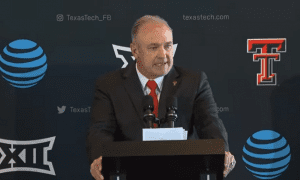
“Contracts and transparency need to be a part of whatever decision they make,” Gundy says regarding the future of college football. “Essentially, we’ve become the NFL now because people can come and go and say please, but we don’t have contracts. So, it’s actually more difficult than what [the NFL] has.
“At some point, somebody a lot smarter than me is going to realize and figure out that we have to have contracts, we have to have transparency to move forward. Then, at least we have a starting line and we know what we’re dealing with. If they go to a subdivision — there’s 32 NFL teams — so if they go to 32 college teams and they can fund them all equally, then the money could be dispersed however they choose to… just like they do in professional sports. Unfortunately, that’s the direction we’re going.
That all falls into the NIL, portal, rosters, all that stuff that’s way over our head. You’ll have a front office. There will a front office for Oklahoma State football that will deal with all the financial side of it, just like they do with the Dallas Cowboys. The [NFL] coaches don’t do contracts, the front office does. That’s what’s going to happen, it’s just a matter of time.”
Whether it’s how Gundy sees it with 32 teams becoming an NFL-like model, or something similar, there is a world in the no-so-distant future that college football teams will have front office structures that deal with contract negotiations with players. In a way, this is already what is happening with NIL collectives, which they themselves aren’t currently directly affiliated with schools or programs.
While the day that happens will also be the death of amatuerism in college football, it will be a return of order to how recruiting and roster building should operate. Right now, there’s nothing stopping a player from leaving his school to take a bigger paycheck somewhere else. But, if there were a contract with his name on it that stipulates he is legally obligated to stick around and not work deals with other teams, like in the NFL, that would change everything.
Unfortunately, we are in a state of constant change and chaos, meaning that everyone that deals with this firsthand is really just doing what they can to hang on for the ride. When things slow down, and they eventually will, some boundaries and rules can be set that won’t limit a player’s earning potential in a given market, and the NFL-model might be the only way to make that feasible.