Jamie Dixon: Basketball Redshirt Rule is ‘Hurting Kids’ Careers’

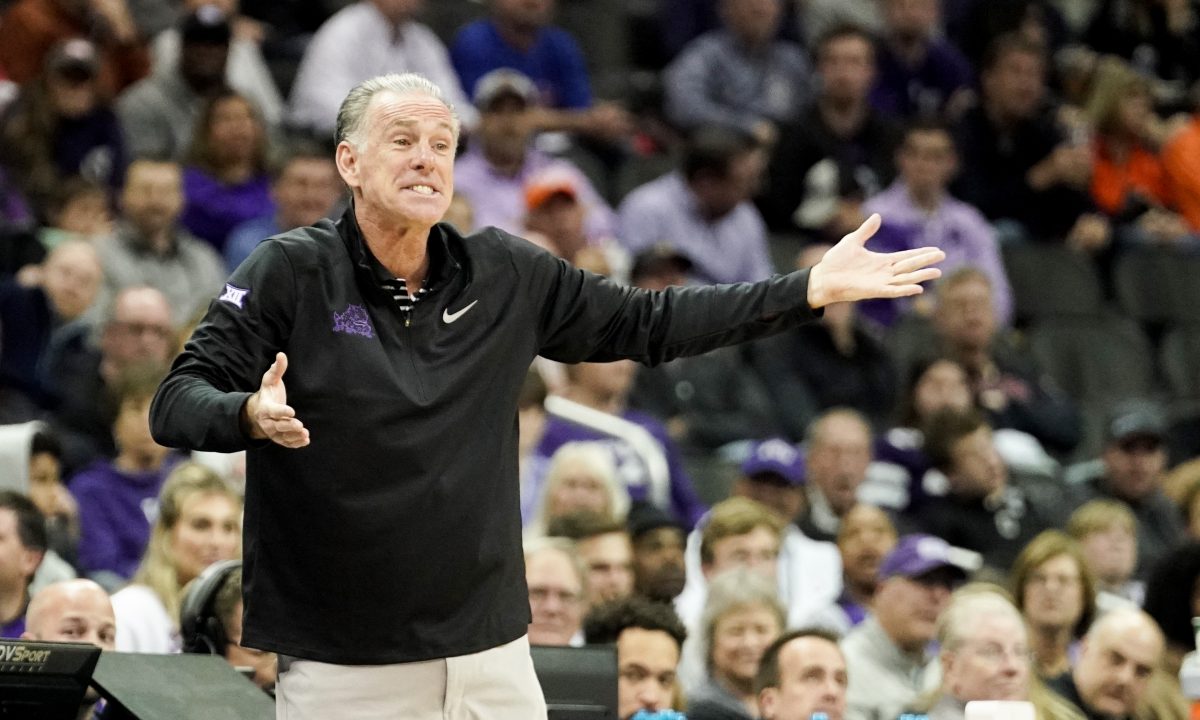
TCU head basketball coach says that he doesn’t get on too many issues publically, but there’s one that’s been on his mind lately: the redshirt rule in college basketball.
“I don’t get on too many things publicly,” Dixon said according to Jamie Plunkett at HornedFrogBlitz. “But that one I have been.”
Back in 2018, the NCAA changed the college football redshirt rule by allowing players to participate in as many as four games before it counts towards a year of eligibility. That’s one-third of a year in football, with 12 games in a regular season.
In basketball, that’s not the case. If a player appears in a single game in a given season, which typically spans somewhere between 30 and 32 games prior to the NCAA Tournament, he burns a year of eligibility. The only way it can be avoided is if the player is granted a medical redshirt for an injury.
How does that make sense? It doesn’t and that’s what Dixon is arguing.
“How football can have guys play four games and we can’t is the most amazing thing,” Dixon said. “You’re hurting kids’ careers…To think that we’re in this position, it’s just so inconsistent. There’s such a fine line. We don’t have eight backups at every position.”
When you take into account that a men’s basketball roster is limited to just 13 scholarship players, while football stands at 85, it makes the question even more perplexing.
Why is the NCAA handicapping basketball players? For example, HornedFrogBlitz points out that if the four players that the Horned Frogs signed in the 2024 class were to redshirt next season four players on the roster, it would limit them to nine players. How is TCU supposed to get through a Big 12 basketball season with just nine players?
In the age of the transfer portal, a player sitting on the bench without an opportunity to see the court might as well pack up and go somewhere that he can play immediately. That just further complicates an issue that has already become a major sticking point for coaches.
Plus, the players redshirting won’t gain a minute of game experience in a given season.
“We’re in a different era as far as the players,” Dixon said. “The players want to stay in college, they want these extra years. They’re going to graduate. We have how many graduates on our team? EMan just graduated. It helps that. Tell me where the negative is. Tell me. Show me. Give me an answer to it.
“Kids will go to five years of school, your non-athletes. What, do we want them out in the workforce before they want to go? Kids everywhere are getting degrees and taking gap years and switching jobs. Nobody has it figured out at 21, why are we asking these athletes to do that? With no internships, with no opportunity to work during the summers and during the school year?”
There doesn’t seem to be a downside to changing the rules, so what’s the hold-up?
“It helps the school. It helps the kid. What am I missing here,” Dixon asked.