REPORT: CFP Looking at New Revenue Model that Favors Big Ten, SEC

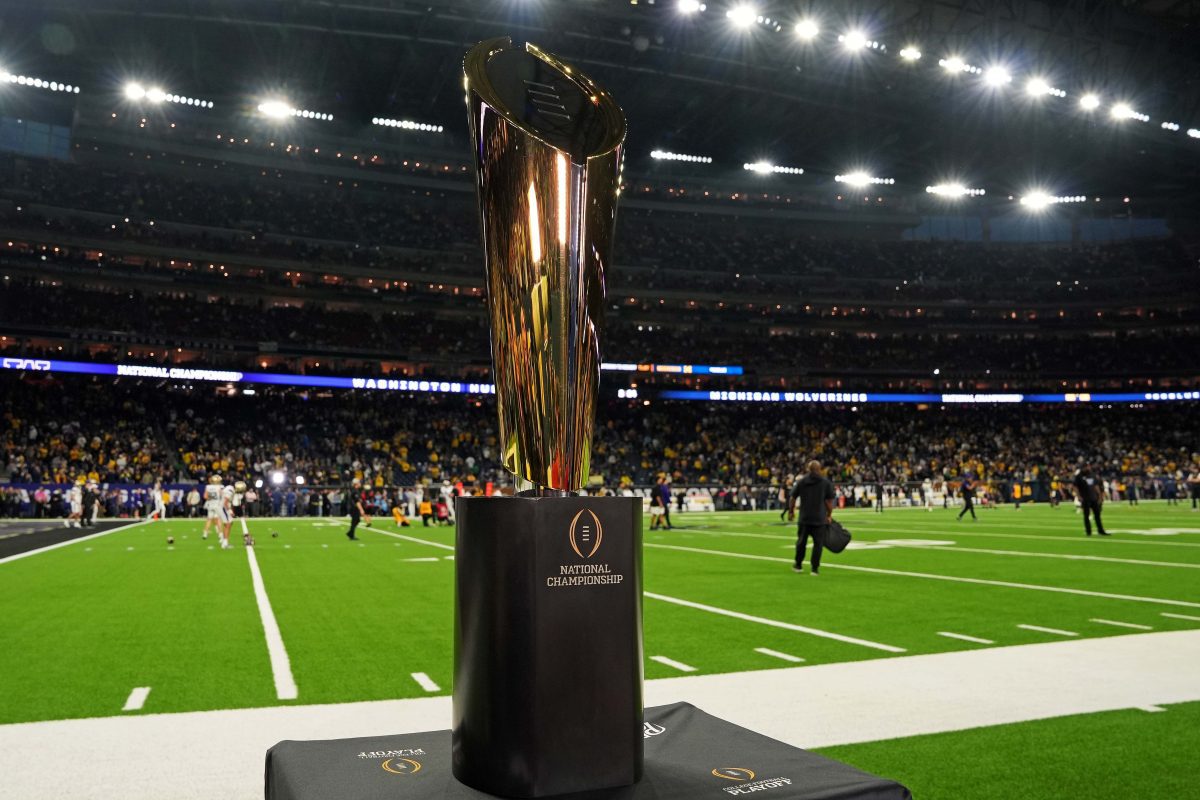
According to Ross Dellenger of Yahoo Sports, the College Football Playoff is exploring the possibility of a new revenue-sharing model that would greatly benefit the Big Ten and SEC.
Further changes appear to be on the horizon for the CFP, with playoff formats and revenue models being at the center of discussion behind closed doors.
While the format—currently 12 teams but potentially moving to a 14—or 16-team model—gathers much of the public attention, it’s the revenue models that will dictate the future of the sport.
As the Big Ten and SEC continue to gobble up college football’s greatest empires, the gap between them and the Big 12 and ACC continues to widen.
A new proposed revenue-sharing model could increase the financial gap even further.
In a proposal being shared amongst administrators this week, the Big Ten and SEC would combine to earn 58% of the CFP’s base distribution. For comparison, the “Power Five” conferences evenly split 80% of the CFP’s $460 million in revenue in the past model.
Even splits of 58% of the revenue would dwarf what the ACC and Big 12 would be splitting, which Delleger says is expected to be around 31%. The roughly 10% that remains would go to Notre Dame and the 64 Group of Five Teams.
According to the report, the SEC and Big Ten would earn an estimated $300 million more than their competition—the “Power Two” would earn a combined $760 million compared to the $440 million that the ACC and Big 12 would share.
If the percentages are correct, SEC teams would earn around $23 million annually, followed by the Big Ten with $21 million, the ACC with $13.7 million, and the Big 12 with around $12.3 million.
With the proposed revenue-sharing model, exclusive rights to the first-round byes in a 14-team model, and three auto-bids a piece, the Big Ten and SEC are asking a lot. But who can blame them? After all, there is a stark difference between what those two can offer and what the rest of college football can offer in terms of brand power.
Of course, the other folks in the room aren’t taking things too kindly.
“I’m watching this real-life curing of conferences,” Kirk Schulz, the Pac-12 representative on the CFP Board of Managers, told Yahoo Sports last month. “You have the Big Ten and SEC and then drop down a level to ACC and Big 12, and then you drop down to Mountain West and AAC, at least in terms of football. Pac-12 is somewhere in all that. I’m glad to see some national leadership from the Big Ten and SEC. Somebody needs to take the reins, but it’s probably a little scary if you don’t happen to be in the Big Ten or SEC. Is there going to be some dictating, ‘This is what things are going to look like’?”
According to Dellenger, just the revenue-sharing model has been enough for officials in the Big 12 and ACC to ask, “Would the Power Two really leave if we say no?”
If the new model is put into action, it would start in 2026 alongside a presumed 14-team playoff model. However, the report states that an internal deadline has been set for the end of next week. By then, the conferences need to agree on what the future looks like with the CFP or bail on the entire idea altogether. ESPN’s deal that will extend the CFP through 2031 is the only thing that is keeping this on the table for now.
While they’re expected to reach an agreement, it appears that more changes are coming to the future format, which will greatly benefit Oklahoma and its future conference.