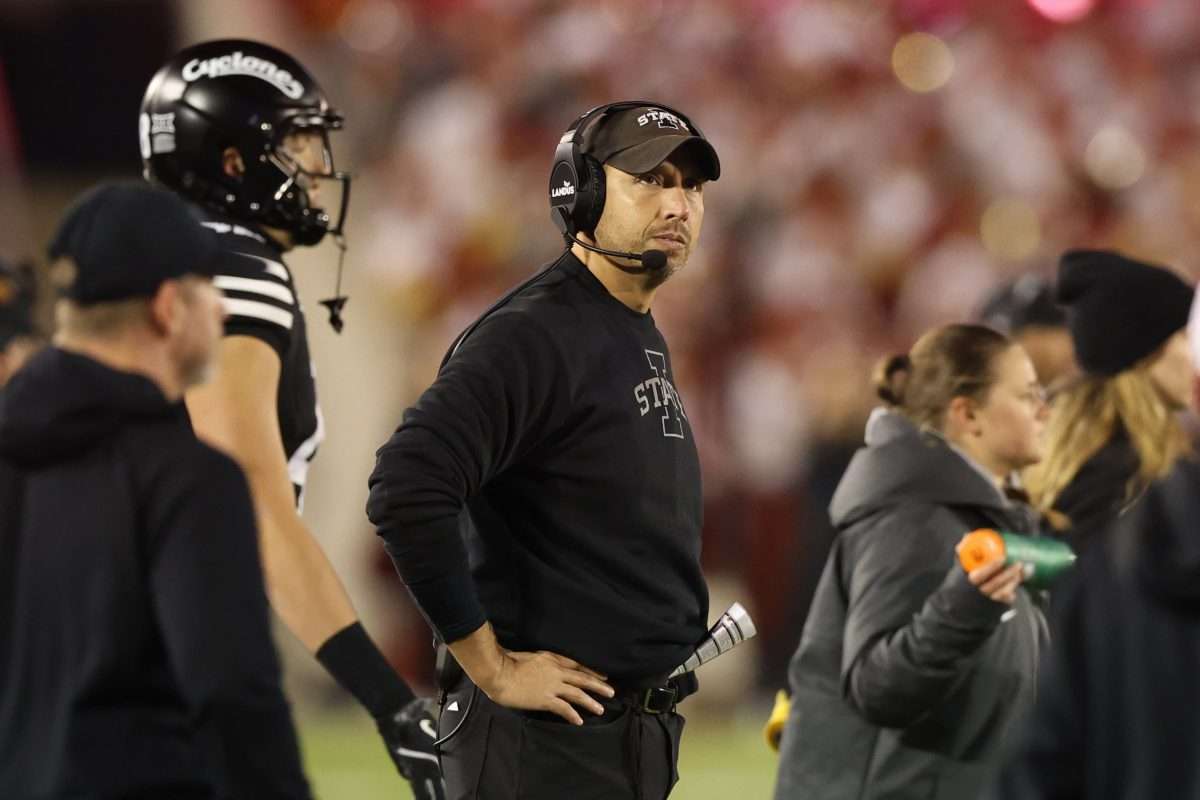
CBS Sports’ Tom Fornelli recently floated Nebraska’s Matt Rhule as a possible next head coach at Penn State, but made it clear that his ideal candidate would come from outside the program, specifically naming Iowa State’s Matt Campbell and Missouri’s Eli Drinkwitz.
Fornelli argued that Campbell has quietly become one of the top “program builders” in the country, the kind of coach who develops players and elevates systems in ways that often go underappreciated until they’re undeniable.
Campbell is exactly that sort of coach. He’s taken teams that weren’t traditionally rich with elite recruits, leaned into developmental culture, and produced NFL talent at a consistent rate. Since 2019, Campbell’s Iowa State teams have sent 15 players to the NFL, including backs like David Montgomery and Breece Hall, and quarterbacks like Brock Purdy. That’s not luck. Its structure, process, and coaching acumen.
Fornelli also took aim at Penn State’s weaknesses under James Franklin, namely, inconsistency at quarterback and wide receiver development. Under Franklin, Penn State had hits at RB, TE, and defense, but the WR/QB pipeline never fully clicked despite elite recruiting classes. He suggested Campbell’s track record of maximizing three-star talent at those exact positions could help solve that hole. In other words, what Penn State lacked under Franklin might align perfectly with Campbell’s strengths.
You also can’t ignore the optics. Campbell has stayed put in Ames through multiple rumor cycles, repeatedly declining opportunities that failed to match what he believed Iowa State could become. He signed an extension that keeps him under contract through 2032. That steadfastness gives him both negotiating leverage and moral standing. It’s harder to paint a coach as a “ringer” when he’s already had chances and declined them.
Of course, speculation and probability are different games. Rhule’s name still holds appeal as he’s a Penn State alum, familiar with the region, and already draws attention in many betting markets as a front‑runner. But Fornelli’s point is provocative: if Penn State really wants to pivot, why not aim for someone who hasn’t operated within its inner circles and has proven he can build upward from less?
Campbell might be a safer, more structurally sound choice for a program that needs both continuity and upgrade. And if Penn State wants to break the cycle, inside familiarity might not be enough.