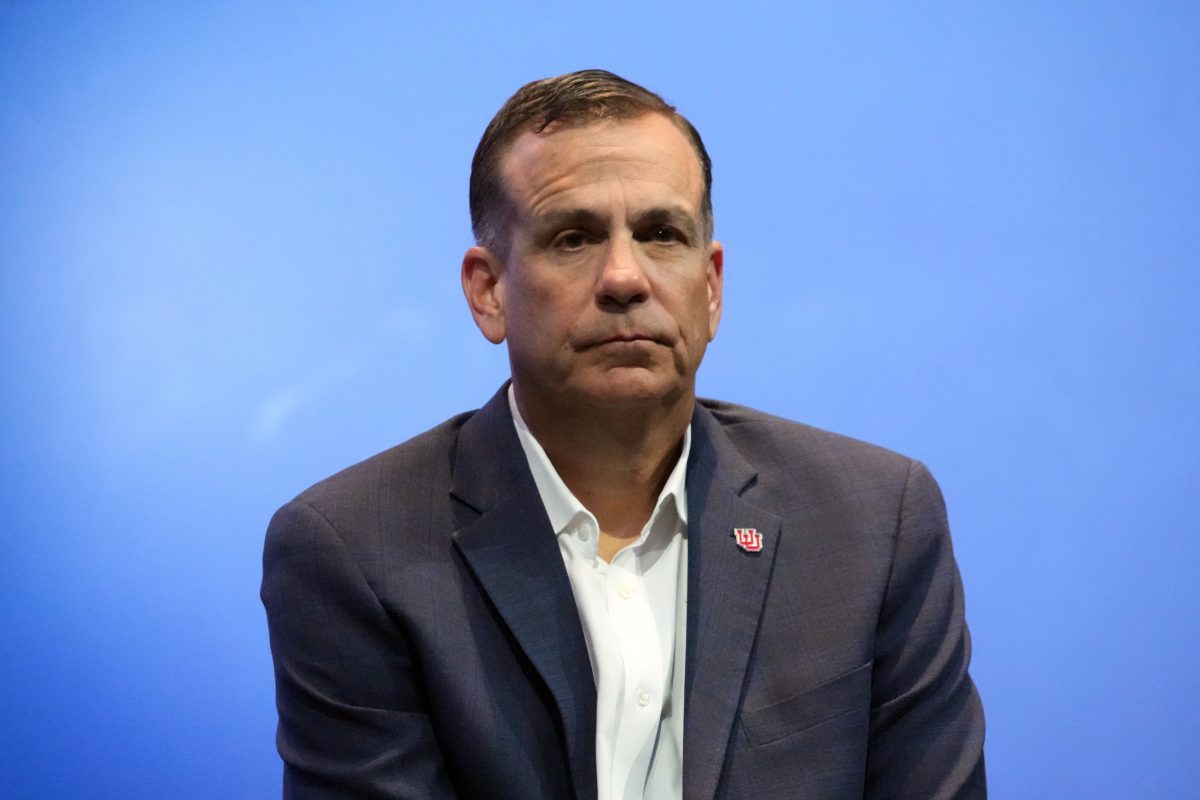
When the College Football Playoff announced that Utah athletic director Mark Harlan had been appointed to the CFP Selection Committee to replace Baylor AD Mack Rhoades, it was easy to view it as just a personnel swap. But it’s much more than that for the Big 12.
With the league fighting for respect in a new 12-team Playoff era, having Harlan in that room is a significant win for Brett Yormark and for the conference’s long-term positioning.
A Turbulent Week for the Big 12’s CFP Seat
Rhoades’ departure created an awkward moment for the Big 12. One of the league’s most influential administrators stepped away from both his Baylor post and his role as CFP chair amid an internal investigation and “personal reasons,” leaving the conference without a voice in the room less than a month before the bracket is set. And it came at a time when the league will be trying to get two, or dare I say three, teams into the College Football Playoff.
In that context, the league needed three things from a replacement:
- Credibility nationally
- Familiarity with the CFP process
- Someone who could back the Big 12
Harlan checks every box. He previously served a one-year term on the committee in 2023 and is already well-versed in how weekly rankings are discussed and decided.
Utah’s AD as the Face of the “New” Big 12
That it’s Utah’s AD filling the Big 12 seat is not an accident.
Under Harlan, Utah has stacked conference titles and national success: multiple football league championships and Rose Bowl berths, plus a run of national titles in skiing and top-four finishes in gymnastics. He’s been the public face of Utah’s transition from the Pac-12 to the Big 12, and has spoken openly about navigating realignment, revenue sharing and the new landscape.
Putting him on the CFP committee does a few things for the Big 12:
- Signals that Utah is central to the league’s future. This isn’t just another new member; this is a flagship, trusted to represent the conference to the entire sport.
- Gives the league a proven operator. Harlan has more than three decades in college athletics and has sat on NCAA oversight and transfer working groups. He’s used to policy, process and politics. College Football Playoff
- Aligns on brand. The Big 12 has positioned itself as national, aggressive and forward-leaning. Utah’s recent football success and national profile fit that identity.
Why His CFP Experience Matters Right Now
This isn’t Year 4 of the old four-team format. Harlan steps into the room as the committee navigates the second year of the 12-team Playoff with automatic bids for the top conference champions and seven at-large spots.
Having someone who already understands how resumes are analyzed, how injuries, blowout losses and style points are discussed, and more, can be helpful for the Big 12.
Harlan doesn’t get to “campaign” for Big 12 teams in a blatant way, but every committee member brings context and perspective. His understanding of the Big 12 grind, the depth of the league, and how its champion should be viewed in comparison to other conferences will absolutely be beneficial for the Big 12 in the weeks to come.
The BYU Angle: Fuel for the Rivalry
From 30,000 feet, this is just good business by the Big 12. Down in the weeds, it adds another layer to one of the sport’s most heated rivalries.
I know BYU fans are not happy. But the reality is this: IF we are down to a two-loss BYU vs. a two-loss Utah, with neither being a conference champion, for a final at-large spot in the CFP, the head-to-head will have to matter, and BYU will have to edge out.
I’m just not ready to go full-blown conspiracy theory on this just yet. I understand why BYU fans might want to go there, but I can’t do it. The head-to-head has to matter, and Harlan won’t try to spite BYU, if they’re in the running and Utah isn’t, for a CFP appearance. I don’t believe that.
Final Thoughts
For the Big 12, Mark Harlan landing on (and really, returning to) the College Football Playoff Selection Committee is more than filling a vacancy. It’s a statement about where the league is going and whom it trusts to help steer the sport’s most important conversation.
In an era when the difference between a 5-seed hosting a first-round game and a 9-seed going on the road might come down to how one league is viewed in that committee room, having a sharp, experienced Big 12 AD sitting at the table is exactly where the conference needs to be.