As the Big 12 men’s college basketball season transitions to the Big 12 Tournament, it’s time for our Heartland College Sports 2025-26 Big 12 Men’s Basketball All-Conference Team.
This was the most impossible team I’ve had to select since I’ve begun covering the conference. The talent in this league is nearly endless. I felt some really talented players off and some of you are going to be unhappy. I get it. I’ll be in Kansas City. You can yell at me in person.
A few notes. I don’t have a vote in any postseason team (official Big 12 teams, AP, etc…). I strive for balance and attempt to recognize as many great players as possible. I look at stats, game performance and how those performances impacted their team and season.
I also emulate the way the Big 12 does its postseason team. The league’s team features 10 players on the first team, five players on the second team and five players on the third team (I violated this guideline more than once due to the talent in the conference). To be selected players either had to have played in enough regular season or enough Big 12 games to qualify for the league’s official postseason honors.
Here is our 2025-26 Heartland College Sports All-Big 12 men’s basketball team.
First Team All-Big 12
G AJ Dybantsa, BYU (Freshman of the Year)
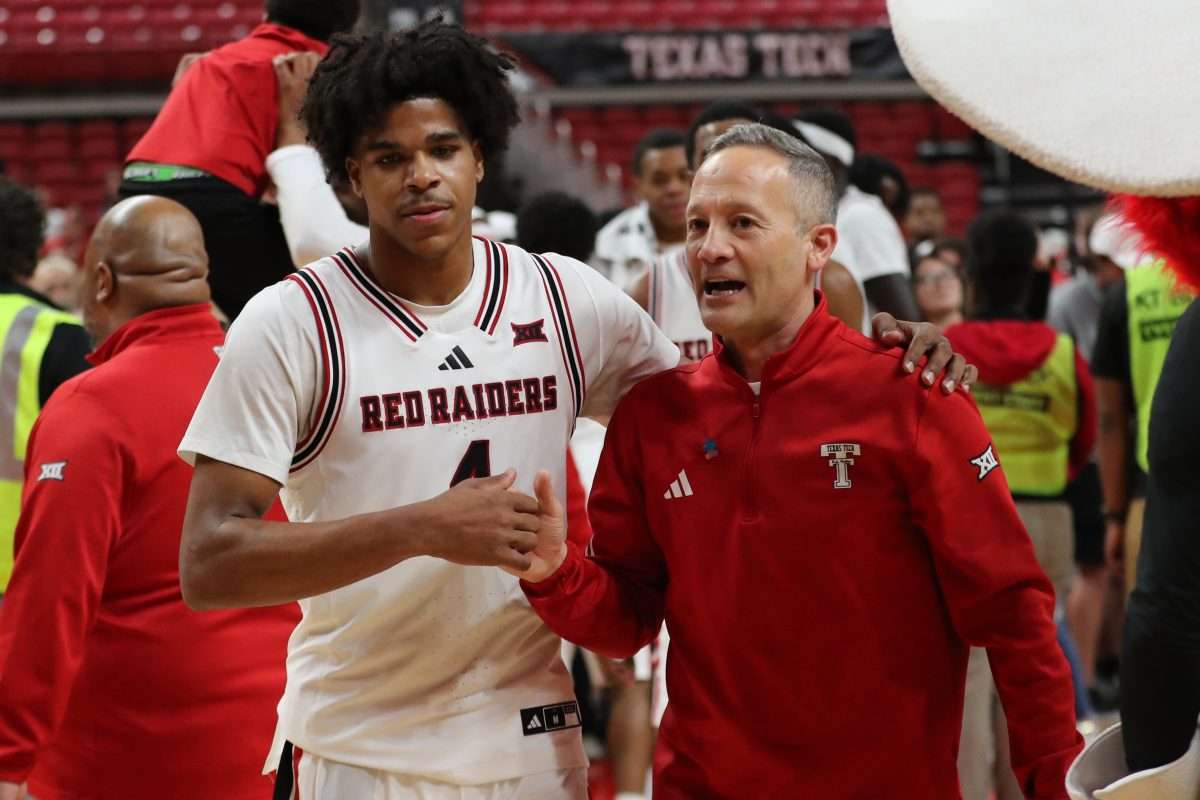
G Christian Anderson, Texas Tech
G Brayden Burries, Arizona (Newcomer of the Year)
G Kingston Flemings, Houston
G Jaden Bradley, Arizona
G Tre White, Kansas
G Themus Fulks, UCF
F JT Toppin, Texas Tech (Player of the Year)
F Joshua Jefferson, Iowa State
F Xavier Edmonds, TCU
You can read my analysis on Toppin, Dybantsa and Burries here.
Anderson (19.2 ppg, 3.7 rpg, 7.8 apg) and Toppin worked the high screen-and-roll to perfection. After Toppin was hurt, Tech trusted Anderson and the rest of the guards to figure things out. Flemings (16.5 ppg, 3.9 rpg, 5.4 apg, 1.5 spg) became the key offensive force for a Cougars team that had two great holdovers guards. By January he was the lead dog. Without Bradley (13.4 ppg, 3.5 rpg, 4.5 apg, 1.6 spg) the Wildcats are not the best team in the conference. He gave that team connection as their freshmen grew up (fast). Same with White (14.3 ppg, 6.9 rpg, 1.8 apg), who was one of the league’s best 3-point shooters and kept Kansas afloat as Darryn Peterson was in and out of the lineup.
Fulks (14.4 ppg, 3.0 rpg, 6.8 agp) was indispensable to the Knights as they turned things around and put themselves in position to reach the NCAA Tournament. Jefferson (16.6 ppg, 7.4 rpg, 5.0 apg, 1.6 spg) capped off a tremendous career with the Cyclones, remaining one of the best passing big men in the country. Edmonds (12.8 ppg, 6.6 rpg, 1.0 apg, 1.0 spg) is the biggest reason the Horned Frogs became the hottest team in the Big 12 in February and is marching to the NCAA Tournament.
Second Team All-Big 12
G Cameron Carr, Baylor
G Darryn Peterson, Kansas
G PJ Haggerty, Kansas State
G Honor Huff, West Virginia
F Koa Peat, Arizona
G Robert Wright III, BYU
We’re breaking the rules with six players. Carr (19.0 ppg, 5.5 rpg, 2.7 apg) has a great season, which was overshadowed by Baylor’s worst season in close to a decade. But he’s a building block if Baylor can keep him. Peterson (19.9 ppg, 4.2 rpg, 1.8 apg) is one of the most talented players in the league. But his lack of availability worked against him. He qualified because he played enough Big 12 games to be among statistical leaders. Haggerty (23.3 ppg, 5.3 rpg, 3.9 apg) had a terrific individual season for a program that seemed uneasy all season and is now looking for a new head coach.
Huff (15.8 ppg, 2.4 rpg, 1.9 apg) handled the move from mid-major basketball to high-major basketball with relative ease. He helped push the Mountaineers into a single bye in the Big 12 Tournament. Peat (13.8 ppg, 5.3 rpg, 2.7 apg) started the season like a rocket but lacked Burries’ overall consistency. Wright (18.6 ppg, 3.6 rpg, 4.6 apg) averaged 20 points in Big 12 play even with the Cougars’ downturn with — and without — the injured Richie Saunders.
Third Team
G Terrence Brown, Utah
G Mo Odom, Arizona State
G Tamin Lipsey, Iowa State
G Milan Momcilovic, Iowa State
F Baba Miller, Cincinnati
G Richie Saunders, BYU
Breaking the rules again. Brown (19.4 ppg, 2.4 rpg, 3.8 apg) and Odom (17.1 ppg, 3.0 rpg, 5.9 apg) should have gotten more attention but their teams weren’t among the Top 8 in the conference. While Odom’s career is done after this season, Brown is a sophomore and Utah would be wise to do what it can to hang onto him.
Lipsey (13.3 ppg, 4.1 rpg, 5.0 apg) is one of those players that doesn’t care where he ranks. He just wants to win. Watching him play the past four seasons has been a pleasure. He’s the biggest reason why the T.J. Otzelberger era has been so successful. Momcilovic (17.0 ppg, 3.1 rpg, 1.0 apg) spent most of the season shooting 50% or better from the arc. He was better at getting his own shot and improved defensively.
Miller (13.1 ppg, 10.1 rpg, 3.6 apg) went underappreciated this season but he’s the biggest reason the Bearcats surged in February and March and got on the NCAA Tournament bubble. Saunders (18.0 ppg, 5.8 rpg, 2.1 apg) played enough games to qualify for honors and his career ended bittersweetly with his ACL tear last month.
Freshman Team All-Big 12
G AJ Dybantsa, BYU (Freshman of the Year)
G Brayden Burries, Arizona (Newcomer of the Year)
G Kingston Flemings, Houston
G Koa Peat, Arizona
G Darryn Peterson, Kansas
F Chris Cenac Jr., Houston
G Tounde Yessoufou, Baylor
Cenac (9.4 ppg, 7.4 rpg) emerged as Houston’s best interior option after an adjustment period to college basketball. If he doesn’t turn pro, he has first-team potential next season. Yessoufou (18.0 ppg, 5.8 rpg, 1.6 apg) was completely overshadowed by Baylor’s awful season. Like Carr, he could not pull the Bears out of the rut they were in during Big 12 play. If he returns, along with Carr, the pair can change that.
Defensive Team
F Flory Bidunga, Kansas (Defensive Player of the Year)
F Joshua Jefferson, Iowa State
G Tamin Lipsey, Iowa State
G Nate Johnson, Kansas State
G David Punch, TCU
Johnson (12.5 ppg, 5.0 rpg, 4.6 apg, 2.3 spg) was the Wildcats’ best individual defender and led the Big 12 in steals per game. Punch (13.6 ppg, 6.6 rpg, 2.1 apg, 1.4 spg, 1.9 bpg) was one of the few players in the league that averaged nearly two steals and two blocked shots per game. He sacrificed some offense to help the Horned Frogs on defense.