Another day, another jersey patch deal. In fact, two major ones that were announced on Tuesday.
Ohio State announced its jersey patch deal with Chase. For a reported $17 million per year, Ohio State will sport a Chase logo on every single one of its uniforms across the Buckeyes’ 30-plus sports. It’s a deal so big that it’s bigger than three jersey patch deals in the NBA, including the in-state Cleveland Cavaliers, per ESPN’s Pete Thamel.
Later in the day, Notre Dame announced its deal with SoFi. The deal is believed to be between $18-20 million per year.
Naturally, that led some folks on social media to look down on the Big 12 over its jersey patch deal with Monster due to the finances. Here’s an example of the conversation.
The Nuance of the Conversaton
I’m not here to defend the upfront finances of the Big 12’s deal with Monster. It is undeniably low. But I think the conversation is far more nuanced and that is a conversation that really isn’t built for social media. So, let’s dive in.
Let’s start with this thesis — a university’s individual brand will always be worth more than a conference’s brand. That’s underscored not just by these three deals but by the jersey patch deals that Big 12 teams have already signed.
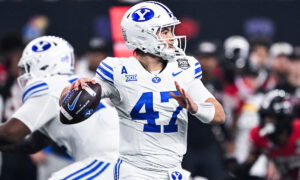
The Kansas deal with XRP is believed to be worth $5 million per year. BYU’s deal with Entrata is just for its football jerseys. The school just announced another deal for its Olympic Sports with BYU Continuing Education. Oklahoma State has a deal with Osage. There’s a handy tracker below.
I think most people understand this thesis deep down and this is the confirmation. The companies that are partnering with these schools are getting value and the schools are getting great money. Those patches will be on television nearly every day for nine months when you consider that each school’s events are broadcast in some way, even if it’s on a streaming service. But how valuable is that investment? That’s a little murkier, if we’re being honest. It’s “free media” when you think about the TV aspect but not “free” to the company.
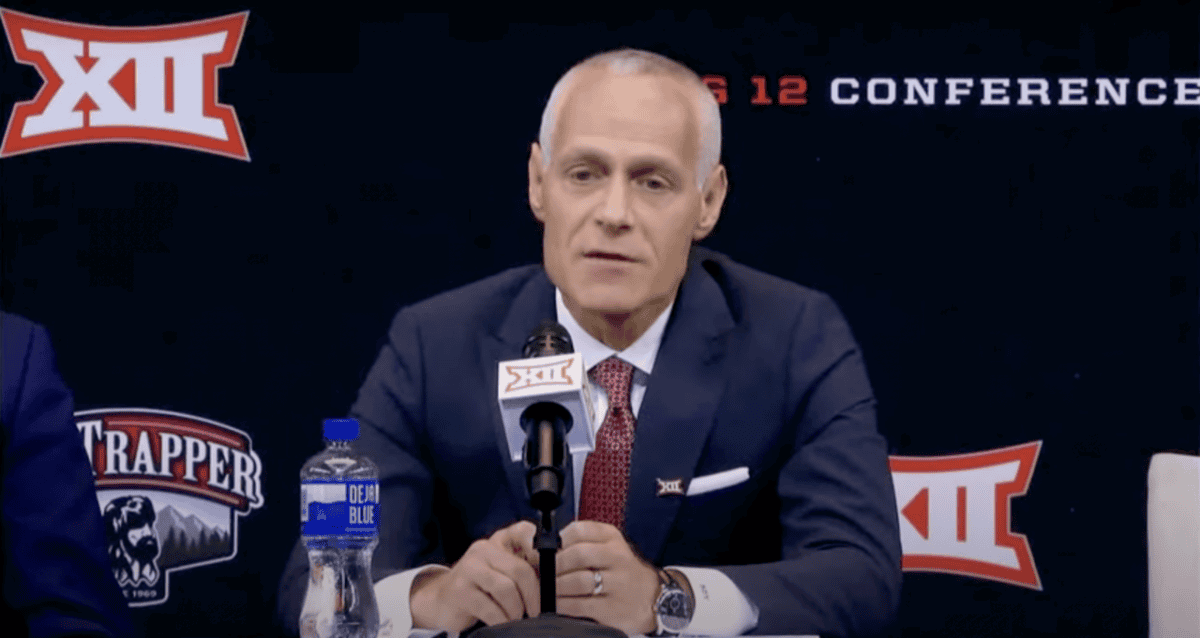
Kansas, BYU and Oklahoma State will also have a Big 12 patch on their uniforms. This is an aspect of the deal some don’t understand. The Monster deal was not designed to take the place of what schools could do. It was an ancillary deal. Additionally, as Bearcat Journal’s Keegan Nickoson pointed out, the Monster branding will be integrated into the Big 12 patch on the jersey and the field. The league isn’t giving up additional real estate. Neither are the programs.
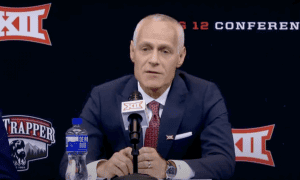
Had that been the league’s intention, then commissioner Brett Yormark would have pushed for a much bigger deal. I have questions about whether anyone would have paid the amount needed to make 16 university presidents happy. But he works at the pleasure of the school’s presidents and athletic directors, and they knew what we know — that their brands would fetch more than the league. My guess is this was a compromise that everyone in the league could live with that would bring additional income — just not that much.
I think a conference’s brand only carries so much weight. Yormark said something early in his tenure that I felt didn’t ring true and it still doesn’t. He said he wanted to make the Big 12 a “destination” for student-athletes. But they don’t choose conferences — they choose schools. If someone wanted to go to Alabama and they got a scholarship offer to Alabama, they would go to Alabama — even if the Crimson Tide were in the MAC. That’s just how it works.
If the Big Ten and the SEC wanted to try this, they could. But I don’t think their deals would be that much better than the Big 12’s. They certainly wouldn’t approach a per-school amount equal to Ohio State or Notre Dame.
So why is the Big 12 doing this? I’ve given that some thought and I think there are a few reasons. A couple of years ago Yormark seemed intent in selling the naming rights of the league to Allstate. The deal never came off, but Allstate sponsors the conference in other areas. He’s always looking to do something different and partnering with someone as a title sponsor for the football season and basketball seasons is a move in that direction. It’s also something no conference has done before. What’s the fair market value of that? Expert marketers might know. But the public? No clue.
He didn’t just wake up and want to partner with Monster. This deal was most certainly shopped. If it wasn’t, that’s a huge miss. This $20 million per year deal may have been the best the league could get in up-front money. The natural question then — why make this deal? Yormark can’t be completely assured it will work. Neither can Monster. And it’s not something you can draw up in a lab and test. You must test it with live ammo, so to speak.
As big as Yormark made this sound at Big 12 media days, I think it’s really a low-key beta test whether this can work at a conference level. It’s why the deal is only two years long. If it works, Yormark can shop it and get more money. If it doesn’t, then it quietly goes away.
We know what the front-end value is and everyone is dunking on it. But what’s the back-end value? Yormark is a big believer in how the social conversation drives value for his conference.
If you read the fine print, there is plenty of back-end value that the league could attain through the partnership. For instance, did you know that Monster is required to include Big 12 Conference assets in its marketing campaigns across 100 countries? What is the value of that to a college conference? I have no clue. But the only way to find out is to try it.
The first big test of this will be the Big 12 game in London between Arizona State and Kansas. It’s the league’s first international conference game. Fox’s Big Noon Kickoff has committed to being there. The game will have a national and global reach. Monster will be ubiquitous that day. It will be the first real sense we get of the potential value of the deal. That’s why the deal shouldn’t be completely dismissed as cheap. We don’t know the full value yet.
I will concede $20 million per year up front for naming rights to a conference’s regular-season football and basketball competitions feels low. But I have nothing to compare it to — except individual university jersey deals, which we now know aren’t comparable. They should be more valuable than any conference deal and they are.
The deal isn’t the issue. The up-front money is the issue for most people. I’m willing to be more patient to see what the back-end value becomes before dunking on it.