The Players Era Festival has grown rapidly since it debuted last year. In 2024, there were eight teams. This season, it’s 16 teams, including Baylor, Houston, Iowa State, and Kansas. Next year, it will be 32 teams, and the Big 12 Conference will have a huge seat at the table.
Just before tip-off of the first game, the Big 12 and the organizers of the festival announced that the conference had purchased an equity stake in the tournament, one that would last for five years and ensure the conference a guaranteed payout each season. In addition, it also guaranteed that the top eight Big 12 teams from the previous year’s standings will play in the 2026 festival and through 2030.
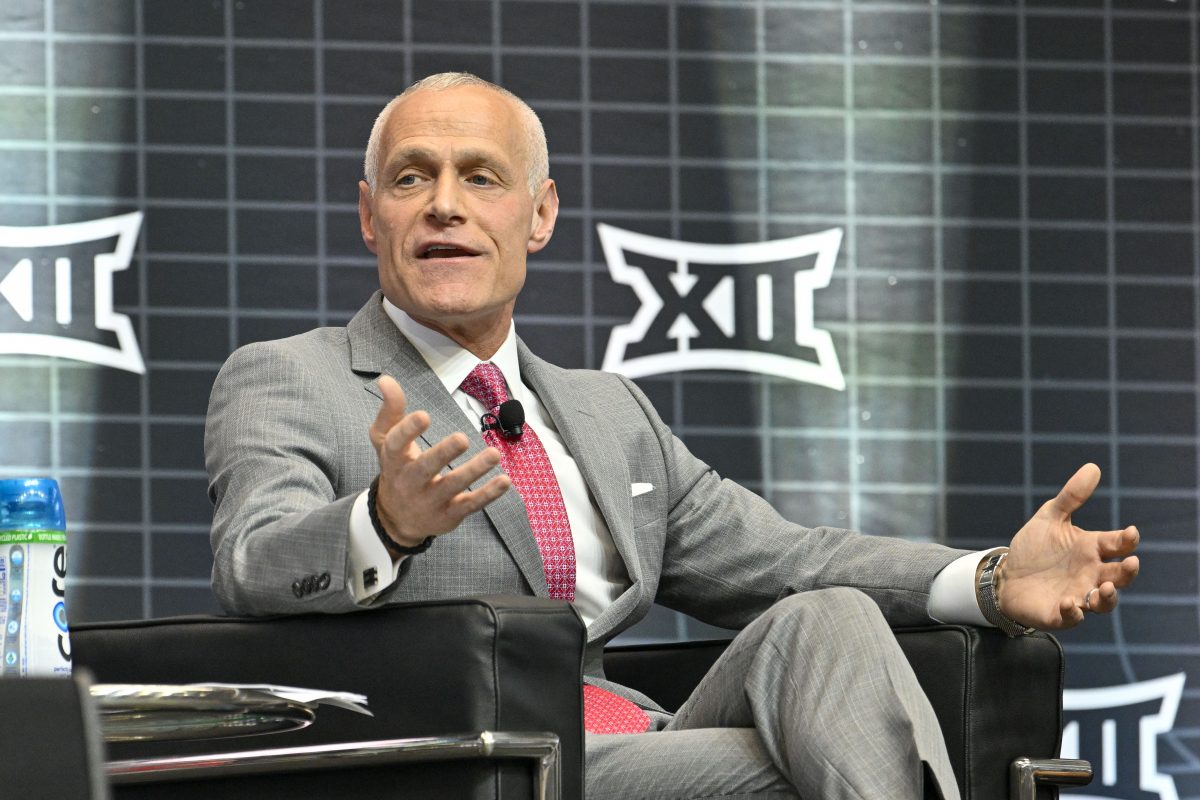
TNT, which is developing a television partnership with both the Big 12 and the Players Era, had commissioner Brett Yormark on in the early stages of the tournament to talk about the deal.
The Big 12’s Savvy Move
This is one of the savviest moves the conference has made since Yormark took over. He’s talked repeatedly about the fact that he believes college basketball is undervalued as a property. By 2030, he would like to take the basketball rights for his league and try to sell them separately from football. That may not be possible, but he has five years to lay the groundwork.
This move can help that goal in a number of ways.
First, for better or for worse, the Players’ Era has changed the multi-team event landscape. It has quickly turned tried and true events like Maui, Diamondhead, and Charleston into second-tier events. As a basketball traditionalist, I think that’s unfortunate. But that’s the reality. Teams can either lament it or embrace it. Yormark clearly wants his conference to embrace it.
Second, Yormark is all about guarantees and access, and this gets the league both. This is a tournament geared toward NIL, so getting his school’s guarantees each year helps their coffers when it comes to paying players. Guaranteeing access to his eight best schools from a year ago rewards them for being competitive enough to make the NCAA Tournament.
Third, it helps with scheduling. Every year, Big 12 teams must spend part of their offseason trying to find an MTE, which usually guarantees them two or three games. For the top eight teams in the Big 12, they’ll be locked in. They know they’re going to Vegas on Thanksgiving week. It also frees up the other eight Big 12 teams to quickly pursue MTE opportunities to guarantee themselves games.
Fourth, it should help those teams’ NET ratings. The way NCAA NET is set up, this access basically guarantees each team three Quad 1 games on a neutral site, the latter of which gives those teams a little forgiveness when they inevitably lose games in Big 12 play. It’s gaming the NET a bit, and the NCAA needs to tighten this up. But, for now, if you know the rules and you know how to game them, you do it. Coaches would rather have these games at neutral sites for that reason.
Finally, it gives the league a showcase during what ESPN calls “Feast Week.” More big games are gravitating toward this week. Many of the other MTEs are this week. The league’s Top 8 teams will get three games on a major network and give their fans a place to go during the holiday week, with a tournament that wraps up in just enough time to get home for Thanksgiving. It also means I may have to start going to Vegas in November. Turns out I have relatives there now.
It’s a huge win for the conference in just about every way. As one user on social media asked me, what’s stopping the other conferences from walking away from this Festival and starting their own under the same parameters? Well, nothing. But this is the only game in town and the only one offering these kinds of guarantees. In this way, the Big 12 is a leader and not a follower. And, believe me, other conferences will follow.
As for the games, Houston beat Syracuse, 78-74, in overtime; Iowa State beat St. John’s, 83-82; Baylor beat Creighton, 81-74; and Kansas beat Notre Dame, 71-61. It was a clean sweep for the Big 12 — and that was before the games even started.