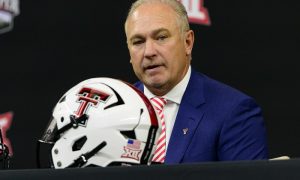
The two most powerful conferences in college athletics have finally signed on to support the Protect College Sports Act, marking a significant breakthrough for legislation that could reshape the future of college sports. And for the Big 12, one of the biggest winners in the latest developments is Texas Tech regent Cody Campbell, who has championed the bill for weeks, very publicly.
After days of negotiations, the SEC and Big Ten announced Friday night they would support the bipartisan Senate bill led by Senators Ted Cruz (R-Texas) and Maria Cantwell (D-Wash.). Their backing gives the legislation new life ahead of Congress’ summer recess, with lawmakers hoping to secure enough votes to move the bill forward.
Campbell, who has emerged as one of the most influential voices in college athletics policy, called the agreement “a major breakthrough that moves us closer to a Senate vote — and a better future” for college sports.
How Much Money?
The revised proposal would dramatically change the current revenue-sharing model. Schools would be allowed to distribute up to $27.5 million to retain athletes, on top of the existing $21.3 million revenue-sharing cap established through the House settlement. The additional money is designed to replace many of the NIL payments currently flowing through third-party collectives and associated entities, creating a more structured compensation system for athletes.
For Big 12 schools, that could bring more stability to an NIL environment that has often favored programs with the deepest-pocketed donor collectives. The legislation also seeks to tighten rules surrounding third-party NIL deals, an issue the SEC and Big Ten pushed to strengthen before agreeing to support the bill.
Of course, plenty of questions remain. It’s still unclear how the proposed spending model would fit alongside the House settlement, which established a hard cap tied to athletic department revenue. The future role of the College Sports Commission, the NCAA’s new NIL enforcement arm, is also uncertain if third-party deals become far less common.
The Timing
The timing of the agreement is also notable. It came just hours after the NCAA suffered two more legal defeats involving its new age-based eligibility rules, further highlighting the growing pressure on college athletics leaders to find a long-term legislative solution rather than continue fighting costly court battles.
Despite the momentum, the Protect College Sports Act still faces significant hurdles. It must first earn enough support in the Senate before advancing to the House, where previous attempts at college athletics legislation have stalled.
Still, from a Big 12 perspective, Friday represented an important step forward. With Campbell helping shape the legislation and the SEC and Big Ten now on board, the conference has a prominent voice helping guide what could become the most significant overhaul of college athletics governance in decades.