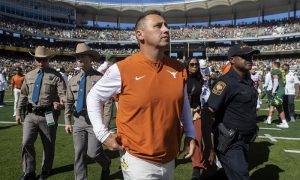
The rapid rise of prediction markets and alternative sports wagering platforms is creating a new compliance headache across college athletics, and the Texas Longhorns are the latest program to find themselves navigating the issue.
According to records obtained by Horns247, Texas self-reported seven Level III NCAA violations related to sports wagering between January and August. The violations involved members of multiple athletic programs and departments, including football, women’s soccer, men’s track and field, and athletic department staff. None of the reported wagers involved Texas athletic events, and no individual wager exceeded $1,000.
While the Longhorns are now a member of the SEC, the situation serves as another reminder for programs throughout the Big 12 and across college sports about the increasingly blurry line between legal wagering products and NCAA compliance rules.
One of the most notable aspects of the report is the role of prediction-market platform Kalshi, which reportedly was connected to six of the seven violations. Because Texas does not allow traditional sports betting, some athletes and staff members may mistakenly believe platforms such as Kalshi or daily fantasy-style products operate outside NCAA restrictions. However, NCAA rules prohibit student-athletes and many athletic department employees from participating in sports wagering activities, regardless of whether the platform is legal in a particular state.
Texas officials reportedly discovered one case involving a football player who placed just over $34 in wagers on college and professional basketball. The university self-reported the matter as part of its compliance process.
The growing number of cases across college athletics has prompted conferences to increase monitoring efforts. SEC schools have been required to use ProhiBet, a compliance tool designed to identify wagering activity tied to student-athletes and athletic department personnel. The platform has become an increasingly important resource as legal and quasi-legal betting options continue to expand nationwide.
For Big 12 schools, the lesson is clear: compliance departments face a rapidly changing landscape where new betting products are emerging faster than many athletes and staff members can fully understand the rules surrounding them.
The Texas case appears to be more about education and awareness than major wrongdoing. Still, it underscores a challenge that every athletic department in the region is facing as prediction markets, fantasy contests, and other wagering-adjacent platforms continue to gain popularity among sports fans.