What does the massive Skydance merger mean for the Big 12 Conference and its future media rights? That question became much more important this week as CBS Sports and Turner Sports came under the same corporate umbrella, bringing together two networks that already carry Big 12 football and basketball programming. There are reasons for Big 12 fans to be excited about what this could mean when the conference returns to the negotiating table later this decade. But in the short term, there are also some legitimate questions about sublicensing deals, television exposure and where the Big 12 fits into a massive new sports portfolio.
What’s going on in the Big 12 and beyond? I expand and explain every Sunday in Postscripts at Heartland College Sports, your home for independent Big 12 coverage.
Time to talk about television, the Big 12 Conference and the future.
Will Skydance be Good for the Big 12?
After Paramount purchased Warner Brothers Discovery earlier this week, CBS and Turner Sports are now under the same umbrella and will be called Skydance moving forward. Most hailed it as great news for the Big 12. After all, both are partners with the league, albeit through sublicense deals with ESPN. But, both entities carry Big 12 content. So the merger is a good thing, right?
Right?
That’s how I felt at first. But, after a few days of reflection, I have questions.
The desk.net on X (formerly Twitter) provided a good graphic that showed just what sports rights Paramount/CBS and Warner Brothers Discovery (which owned Turner Sports) currently have the rights to broadcast. It’s … a lot.
In all, the new Skydance entity holds rights to 36 different leagues. That’s an awful lot of carriage for the new entity to deal with.
It begs this first question — long-term, how many of the networks that Skydance now owns will broadcast sports?
On the CBS side, there is, of course, CBS, along with the CBS Sports Network. There is also streaming on Paramount+. On the Turner side, there is TNT, TBS and truTV. They partner with HBOMax for streaming. Front Office Sports reported that David Berson, previously CBS Sports CEO, will lead what will be called Skydance Sports. An additional part of the plan during the negotiation process was for the two streaming services to merge.
Berson has some decisions to make when it comes to which networks will do what? But he also has a ton of programming to deal with and a ton of options under which to broadcast. Both are good things — or are they?
The graphic above shows deals with 36 leagues. ESPN has just 14. Fox has 13. A few years ago, ESPN was checking out of some broadcast rights at the negotiating table due to cost.
Does anyone really think that Skydance can handle all this financially? The total price of the merger was $110 billion. They’re going to have to look to make cuts.
Initially, those cuts are going to be in personnel. This is corporate America folks and this is what happens. CBS and Turner are great sports operations but in the world of Skydance that’s a redundancy that will eventually be rectified. Will Turner Sports just go away? Or become a “boutique” brand for certain events?
I’m old enough to remember when ABC/Capital Cities bought ESPN in the 1980s. What eventually happened was the ABC sports brand, perhaps the best brand of the three broadcast networks, was swallowed up by ESPN. Now any sports on ABC is produced by ESPN. The days of Jim McKay and Roone Arledge died with that purchase.
I’m not sure if Turner Sports dies because of this, but it becomes something different. Because there is no way CBS is rebranding for sports. Not happening. It doesn’t mean TNT would lose sports. It just means it would be under a different banner. After all Skydance needs the channels.
The next issue for Skydance will be what to keep and what to, well, either give away or buy out. That’s where I have questions about the Big 12 in the short-term. John Ourand of Puck Sports reported that the new entity has plans to do away with some of the sub-licenses it has, including the Big 12 programming it currently takes from ESPN.
Now, that’s not the end of the world. The sublicence was short-term to begin with. But that sub-license was a way to get the league more exposure on another network and a chance to build a relationship with a network that might be interested in taking more Big 12 programming come the next contract after the current one expires in 2030-31.
Last season the league spun basketball programming with five different networks — ESPN, Fox, TNT, CBS and NBC/Peacock. The last three were ESPN sublicenses. Starting next year it looks clear that it’s going to be no more than four with the merger. The CBS sublicense for basketball ends after this season. Based on Ourand’s reporting, I have questions whether Skydance will continue that sublicense next season.
Those are the short-term implications. As with any merger or acquisition, there’s going to be a reset. And that reset for Skydance is likely going to require anywhere from 12 to 18 months to complete. That takes us into the end of 2027.
Even if the sublicenses do go away, this merger still has great potential for the Big 12 for a couple of reasons.
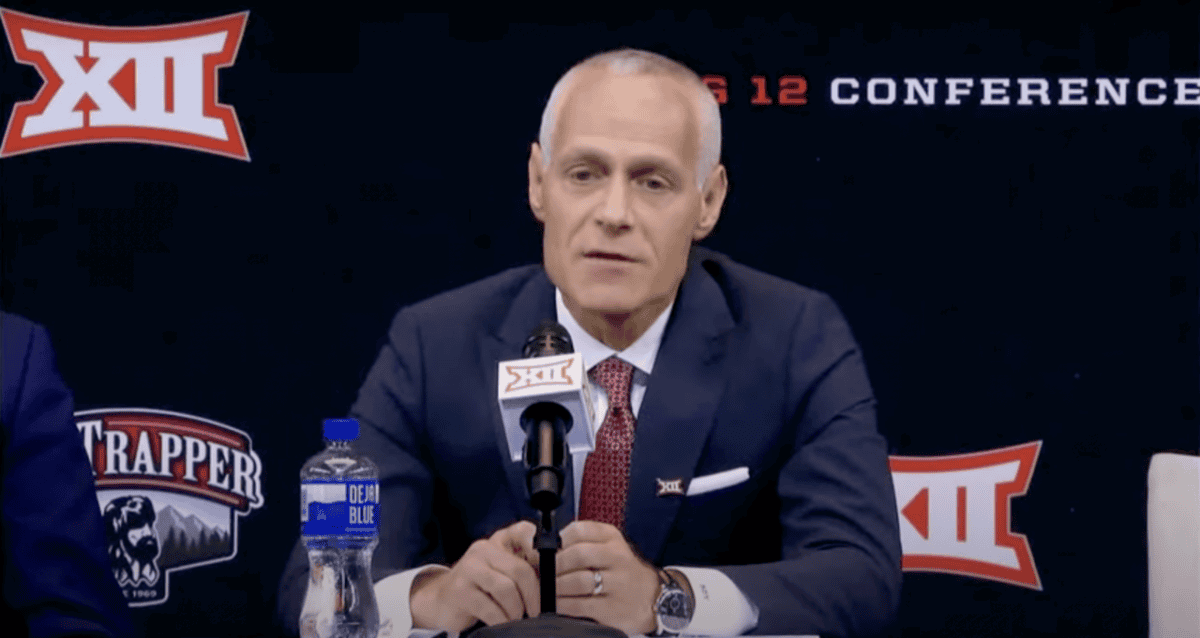
First, Skydance clearly is invested in sports. It may trim some of their packages back, but they clearly see the good in it. Their programming has worldwide reach. That has appeal to the Big 12 and to Brett Yormark because he wants his conference to be a global conference. You can disagree as to whether that’s a good thing but having a partner like Skydance that has worldwide programming is an asset.
Even with the merger, that still gives the league four different potential partners to go to the next time the media rights are negotiated. And this time around, Skydance should have more negotiating power.
Second, one of the entities that helped facilitate this purchase was Red Bird Capital. If you follow the Big 12 then you know what Red Bird is. That company, along with Weatherford, helped create the Big 12’s private capital plan. And while none of the teams tapped into the substantial line of capital that was offered to them, there are plenty of other things that Red Bird and Weatherford are working with the Big 12 on to enhance the league’s revenue.
One shouldn’t discount the fact that Skydance and the Big 12 have a relationship with the same private capital partner. That’s a relationship that can be leveraged at the negotiating table.
Perhaps the best part of this merger for the Big 12 is the timing. I can’t imagine how this would have worked out for the conference if this happened say three years from now. Having it happen now gives the new entity time to work through its plan.
I know Big 12 fans would love nothing more than for ESPN to go away as a partner. I get it. No amount of College Gameday appearances is going to change just how embedded the SEC is with ESPN and that’s fair because ESPN is the SEC’s exclusive broadcast partner. I think many big 12 fans would tell you that’s the same partnership they want — just not with ESPN.
I’m not sure if an exclusive partnership is the right thing for the Big 12. I’m not even sure if leaning into a Big 12 Network is a good thing for the conference. But I did walk away after considerable thought believing that ultimately Skydance has the potential to be a bigger positive for the Big 12 than a negative. It will be bumpy for a while.
But come around 2029, when the Big 12 would start looking to negotiate a new deal, this new entity should be able, and most likely willing, to be a more substantial partner to the Big 12. That’s probably the biggest takeaway from the last week.