Texas Tech claimed its first outright conference title since 1955 last season, but any celebrations over that particular triumph were extinguished all but immediately. They managed just 88 yards, three first downs, and two turnovers before halftime of their 23-0 Orange Bowl beatdown at the hands of an Oregon side that had done what no Big 12 opponent managed all season: made the Red Raiders look ordinary. The boosters who’d bankrolled the transfer-portal spree that turned a program with one ten-win season since 1976 into a conference champion had every right to wonder what they’d actually bought.
What they’d bought, it turned out, was real. Texas Tech beat BYU 34-7 in Arlington to close the regular season, a win that snapped a 71-year outright title drought and sent the Red Raiders into the playoff as a No. 4 seed with a bye straight through to the quarterfinals. Jacob Rodriguez swept the Butkus, Nagurski, and Bednarik trophies, and David Bailey — a Stanford transfer nobody outside Lubbock was tracking two years earlier — terrorized quarterbacks all fall behind a defense that led the nation in takeaways.
Even in the Orange Bowl, with the offense cold, Bailey kept coming, forcing pressure that made evaluators circle his name. Four months later, the Jets made him the second overall pick. The question now is whether the Red Raiders can stand up to the Big 12 gauntlet once again, only this time without the best defensive player they have ever produced. Here are the betting favorites to win the conference in 2026.
Texas Tech
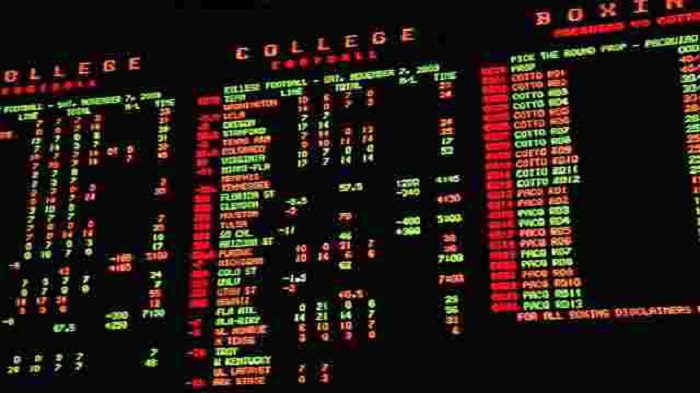
Online betting sites once more make the Red Raiders the team to beat. The latest odds from Lucky Rebel Sportsbook currently list the defending Big 12 kings as the odds-on -105 favorite to defend their conference title and repeat as champions in 2026. And truth be told, it’s hard to argue with that take.
Joey McGuire’s roster — built through a level of NIL spending rival coaches still grumble about privately — delivered the program’s signature season in 2025, anchored by a Shiel Wood defense that finished No. 1 nationally against the run. Much of it returns: linemen Adam Trick, Mateen Ibirogba and AJ Holmes, linebackers Ben Roberts and Austin Romaine, and cornerback Brice Pollock.
What doesn’t return is Behren Morton, the quarterback who ran the operation. In his place: sophomore Will Hammond, a first-year starter walking into a program with no more room for modest expectations. Some outlets, wary of that inexperience, have quietly dropped Texas Tech outside their top ten nationally — even while conceding that the roster is still the league’s deepest. A year ago, nobody blinked if Texas Tech lost a big game. Now, anything short of a trip to Arlington reads as regression.
BYU
BYU spent last season proving 2024 wasn’t a fluke, riding true freshman Bear Bachmeier — 3,000-plus passing yards, 26 total touchdowns, a BYU record for rushing scores by a quarterback — all the way to the Big 12 title game before Texas Tech’s defense shut it down. That should’ve been the springboard into 2026. Instead, the offseason delivered a gut-check: defensive coordinator Jay Hill, architect of one of the league’s best defenses, left for Michigan.
Programs lose coordinators every cycle, but losing one in the exact window when continuity matters most stings differently. What the Cougars got back was a portal haul strong enough to soften the blow — Oregon receiver Kyler Kasper and USC tight end Walker Lyons both arrive as immediate difference-makers, and Walker’s younger brother, quarterback Ryder Lyons, is in the fold for whenever his mission wraps.
Bachmeier is the safest bet in the conference at his position. Whether a defense under a new coordinator holds up determines whether BYU finally closes the gap. +600 odds make them a distant second-favorite.
Utah
Kyle Whittingham, the winningest coach in Utah history, walked away for Michigan weeks after the school had already handed the program to his own hand-picked successor, Morgan Scalley. Utah had spent years building toward an orderly transition and instead got a coach bolting for a blueblood mid-succession, taking offensive coordinator Jason Beck and several assistants with him.
What’s left for Scalley is a program that just posted an 11-2 season, punctuated by a 44-22 Las Vegas Bowl rout of Nebraska in which quarterback Devon Dampier — a New Mexico transfer who’d already won Big 12 Offensive Newcomer of the Year — ran for three touchdowns and threw for two more in the best game of his career.
Dampier is back, healthy, working with new coordinator Kevin McGiven, but he’s also replacing a meaningful chunk of the line that protected him. A Manning Award finalist trusting a program mid-transition, behind linemen who’ve never started together, decides whether Utah’s climb continues or stalls.
Kansas State
Kansas State went from 17th in the preseason poll to 6-6 and out of the postseason entirely, a collapse abrupt enough that Chris Klieman’s retirement barely registered as a surprise. What turned heads was how fast the Wildcats moved — Klein, a Heisman finalist as a player and the offensive coordinator when this program last won a Big 12 title in 2022, left Texas A&M on a five-year, $4.3 million-a-year deal to come home. That kind of money isn’t handed out for a soft landing; it’s a mandate.
His best asset is quarterback Avery Johnson, who threw for 2,385 yards and ran for 477 more in a down year and still turned down a shot at declaring early, betting on himself and on Klein instead. Joe Jackson, Jayce Brown, and Jaron Tibbs give him real weapons, and most outside forecasts have Kansas State around 8-4 — modest enough that a Klein honeymoon season carries upside if Johnson stays upright, and the staff finds its rhythm fast.